← All recipes
Sunday Bolognese
Steps
- Pulse the mirepoix in a food processor 5 to 6 times before it goes anywhere near the pot. The bagged stuff is cut for stock, in half inch chunks, and three hours will not melt that into a sauce. Add the diced sweet onion to it. One bag alone is short of the volume you want for two pounds of meat.
- Render the pancetta with the olive oil in a heavy Dutch oven over medium low, until the fat has come out and the cubes are golden but not crisp. Do not hurry this. You are building the fat that everything else cooks in.
- Add the mirepoix and onion. Sweat over medium low, stirring now and then, until everything is soft, sweet and just starting to take on color. Twenty minutes at the absolute minimum. Sweet onion carries more water than yellow, so give it longer than you think.
- Raise the heat to medium high. Add both meats with the salt and pepper. Spread it flat and leave it alone for 4 to 5 minutes before you touch it. Keep going until the liquid has cooked away and the meat is properly browned with dark fond on the bottom of the pot. This is where most bolognese fails. Pale, steamed meat cannot be rescued later.
- Push the meat to the sides, drop the tomato paste onto the bare pan, and let it darken to brick red before you stir it through.
- Add the milk and the nutmeg. Simmer gently until it is nearly absorbed. It will look curdled and broken. Ignore that, it sorts itself out over the long cook. The milk goes in before the wine. It coats the meat while there is still no acid in the pot, and that is what makes the texture tender instead of grainy.
- Now the wine, scraping every bit of fond off the bottom. Simmer until the pan looks almost dry again.
- Add the tomatoes, 1 cup of the broth, the cheese rind and the bay leaves. Bring it to a bare simmer, one lazy bubble every few seconds and no more. Cover partially and cook for 3 hours, stirring every half hour. Add the second cup of broth only if it tightens too far. Most recipes call for all of it up front and you end up boiling to reduce, which is not the same thing as simmering.
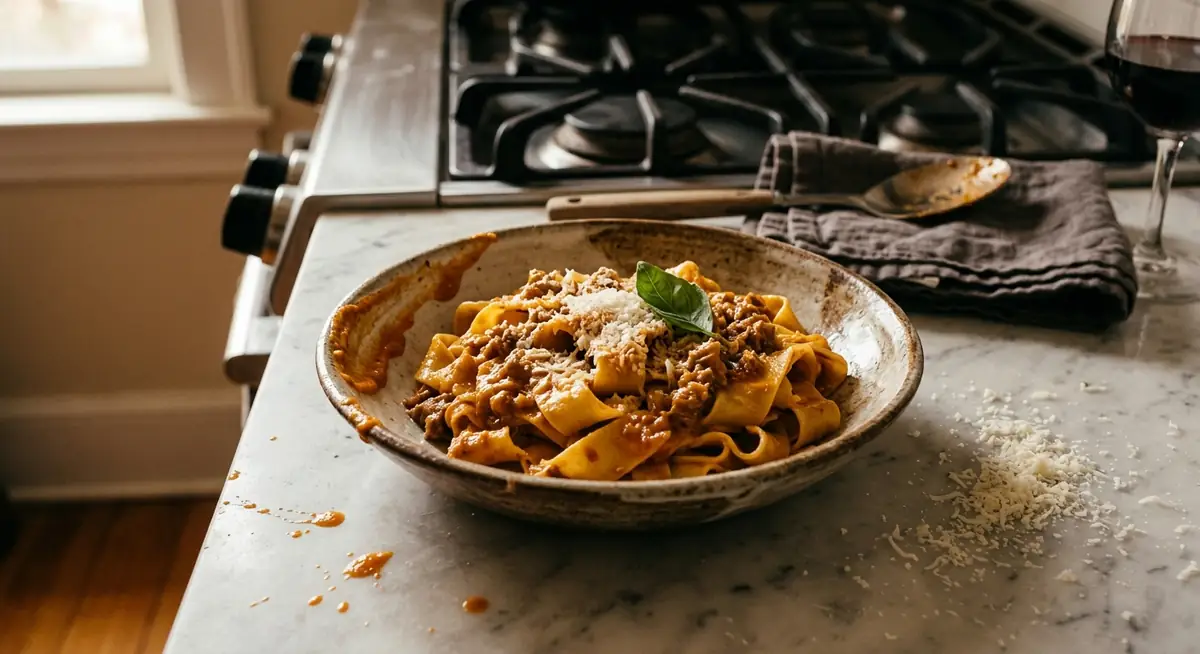
- Pull the rind and the bay. The sauce should be thick and glossy, orange brown, with fat pooling at the edges. Correct the salt now and go further than feels right. Put the lid on and leave it off the heat for 2 hours.
- Half an hour before you eat, put the pot back on the lowest burner setting to come back up to temperature. Taste and salt it again once it is fully hot. What read as seasoned when it was warm will read flat when it is hot, every time.
- Boil the pasta two minutes short of the package time in water salted like the sea. Reserve a mug of the water. Working in two batches, transfer the pasta into a wide pan with a few ladles of sauce, the butter and a splash of pasta water. Toss hard over medium heat until the sauce clings to every strand. Off the heat, add the grated cheese and toss again.
Notes
- Two batches, not oneA pound of pappardelle plus sauce overwhelmed the largest stainless pan in my kitchen, filled right to the brim. A pan that full cannot be tossed, and tossing is the entire point. It is what emulsifies the starchy water and the fat into something that coats. Crowded pasta just gets stirred. Do it in two rounds even if you find a bigger pan, or use the Dutch oven the sauce came out of, which has the volume and is already hot.
- Do not cut the pastaA pound is right for four people. The problem was the vessel, not the quantity.
- Start by one for a seven o'clock dinnerThirty minutes of knife work, twenty to render and sweat, ten to brown and deglaze, three hours of simmer, then the rest. If your afternoon runs long, steal the time from the rest and not from the simmer.
- Salt twiceOnce when it comes off the heat, once when it is hot again before serving. The first correction happens below serving temperature and will always land under seasoned.
- The leftovers are the pointTwo pounds of meat makes far more than one dinner. This covered a second night four days later and it was better than the first.